The summer of 2015 was supposed to be one of the best summers of my life. I had married my best friend, my girls were successfully matriculating at Sam Houston State University, and James and I were planning to travel across the American Southwest on a photo safari.
Ah, the best laid plans of mice and men…
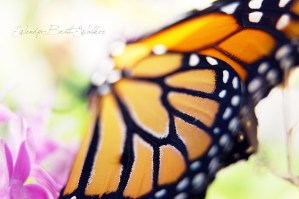
A routine visit to my doctor resulted in a diagnosis of thyroid cancer. That revelation resulted in 2 surgeries and treatment at St. Luke’s, which resulted in cancelled summer plans. At that same time my mother, once a power house of energy and spirit, was in her final days on earth due to a rare, long and drawn out disease that robbed her of her strength, her ability to talk, and eventually even her ability to eat. And it robbed my sister and I of our mother. She had been my touchstone, my support system. Her passing hit me hard. To cheer me up my sweet husband offered to create an oasis in our backyard. And so it was that on a beautiful spring day, James and I found ourselves at Maas Nursery in Seabrook. Searching for flowers to spruce up our backyard I happened to see a Monarch butterfly flitting maniacally around some unassuming plants. What Paradise is complete without butterflies? So I scooped up a few of those milkweeds, took them home, and a few days later there were caterpillars. Baby butterflies! Down the rabbit hole I fell, and I fell hard. My internet research uncovered the plight of the disappearing Monarch Butterfly due to various human interferences. According to the articles all I had to do to help was plant more milkweed. But that wasn’t enough for me.
I needed to protect my babies, so I bought an enclosure. Then I bought a bigger enclosure. Then an even bigger one. By the fall I was raising the butterflies from egg to adult, photographing them, testing them for parasites, tagging them for research with the University of Kansas, and releasing them to make their journey to central Mexico.
At the same time I was becoming interested, (obsessed) my dear friend and spirit guide, Donna Mohlman had also been educating herself on the same subject. I had seen where Fort Worth had held an event to inform the public about the demise of Monarchs and other pollinators in a fun and unique way. I told Donna that we could do something in Baytown, too! In October at the Baytown Nature Center Gala, Donna and I started talking up the idea of a butterfly festival to anyone who would listen. We even handed out milkweed seed bombs attached to photos of my butterflies. Then before we knew it Donna and I were standing in front of the gala guests, and I had a microphone in my hand, talking about the need to save the butterflies by throwing seed bombs. Donna, being incredibly energetic and resourceful, started gathering interested and enthusiastic people, and pretty quickly we had a real life Board of Directors, a name, a 501_3c non-profit designation, and a mission statement. And now, on November 12, 2016, Gulf Coast Monarch Project will host the first annual Baytown SeedFling Wingding, a celebration of Monarch butterflies.
It wasn’t until 2 months after that first encounter with a Monarch at Maas that I learned two things: That the butterfly is a symbol for thyroid cancer, and if you whisper “I love you” to a butterfly it will take the message to your loved one in Heaven.
Now that’s what I call serendipity!
Monarch butterfly populations are on the decline for several reasons. Global warming, illegal logging of their over-wintering sights in Mexico, and unusual weather events have taken their toll. But one of the major issues effecting the butterfly’s numbers is the wide-spread use of pesticides and herbicides that kill off caterpillars and milkweeds in pastures, farm fields, and even roadsides. Milkweeds are the only plant genus Monarchs use as caterpillar food sources. Butterflies are not only beautiful, they are important pollinators, including the pollination of much of the food consumed by humans. The Gulf Coast Monarch Project’s goal is to inform our area’s citizens that we can all help, simply by providing native milkweed and other nectar-rich flowers right in our own back yards. A beautiful, colorful, diverse backyard means more butterflies and bees. And that means we all win!

 Hello Butterfly!
Beautiful story, beautiful woman, beautiful cause. I’m so grateful to be your partner and friend!